
Understanding Surface Quality: 60-40, 40-20, 20-10 – How It Affects Optical Performance
Surface Quality
6/8/20262 min read
When selecting optical components for your project, whether lenses, windows, or mirrors, one often overlooked yet critical factor is surface quality. While material choice like BK7 or Fused Silica affects transmission and thermal stability, surface quality directly influences optical performance, light scattering, and laser damage resistance.
What is Surface Quality?
Surface quality refers to the microscopic scratches and digs present on an optical surface. These imperfections are inevitable in manufacturing but can be controlled through polishing techniques and quality standards.
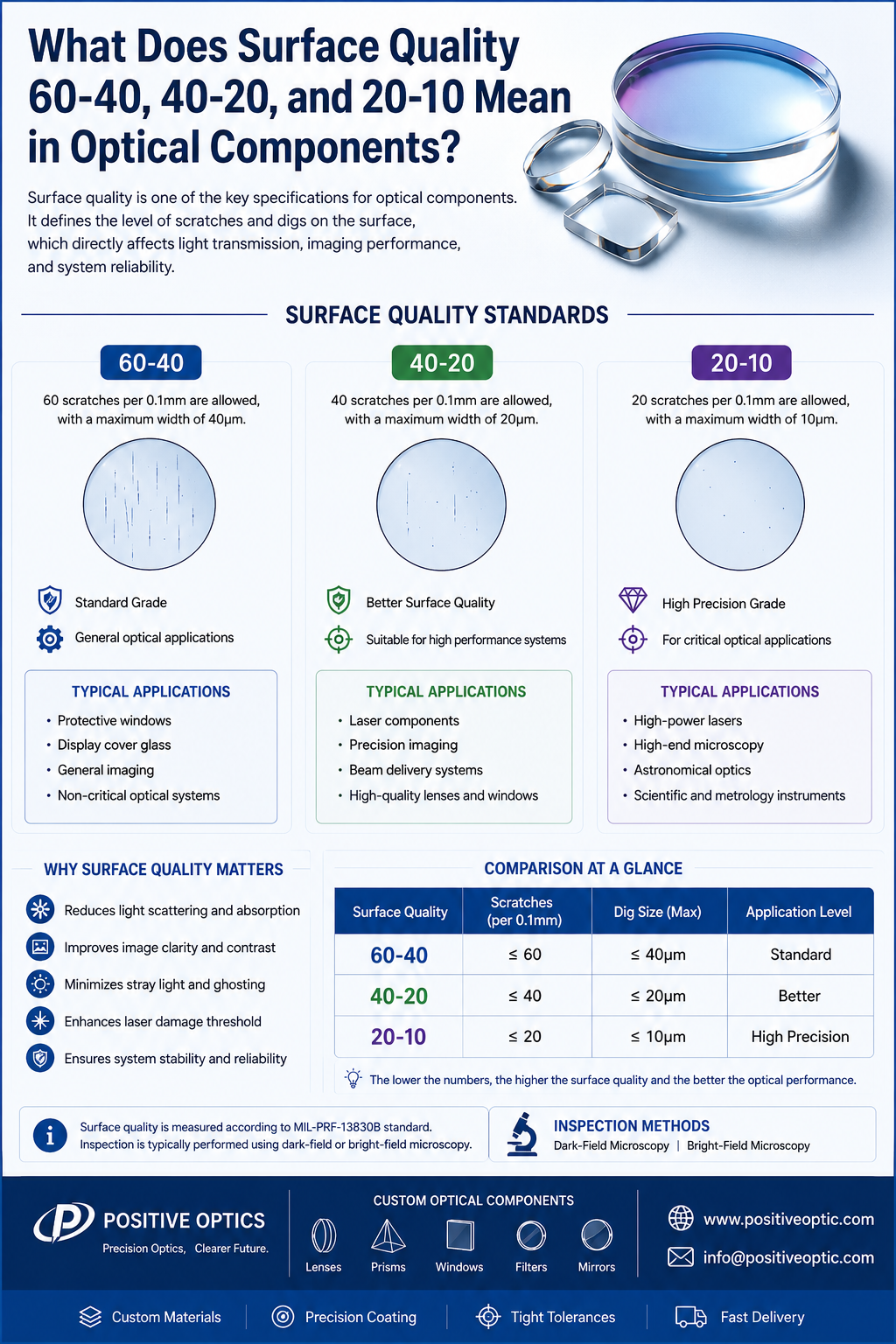
Surface quality is usually expressed in the scratch-dig format, such as 60-40, 40-20, or 20-10:
The first number (scratch) indicates the maximum width of surface scratches in microns.
The second number (dig) represents the diameter of surface pits or digs in hundredths of a millimeter.
Example:
A 40-20 surface means a maximum scratch width of 40 microns and a maximum dig of 0.2 mm.
How Surface Quality Affects Optical Performance
Light Scattering
Scratches and digs scatter incoming light, reducing clarity and contrast in imaging systems. High-precision cameras, microscopes, and scientific instruments require finer surface quality to minimize distortion.Laser Damage Threshold
In laser applications, surface imperfections can create hot spots that reduce the laser-induced damage threshold (LIDT). High-power laser systems typically require 20-10 or better to ensure durability and safety.Coating Performance
Optical coatings like AR or HR layers rely on smooth surfaces for optimal adhesion. Poor surface quality can cause delamination or uneven coating, affecting transmission or reflection efficiency.
Common Standards and Applications
Surface Quality Typical Use Cases
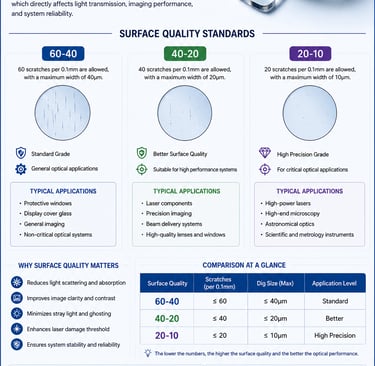
60-40 Low-power visible optics, general imaging, classroom projects
40-20 Mid-power lasers, moderate imaging, laboratory optics
20-10 High-power lasers, UV/IR applications, scientific research
Tip: Always specify the required surface quality based on the end-use application, not just the material. Choosing too low a quality can degrade performance, while overly strict specifications may unnecessarily increase cost.
Surface Quality vs. Material Choice
Surface quality works together with material selection to achieve optimal performance:
BK7: Suitable for visible-light imaging and low-power applications. Typical surface quality: 40-20.
Fused Silica: Ideal for UV, high-power lasers, and precision optics. Typical surface quality: 20-10 or better.
By matching the right surface quality with the right material, you can balance cost, performance, and durability.
How to Ensure Good Surface Quality
Ask suppliers for scratch-dig specifications before purchasing.
Request inspection certificates for critical components.
Handle optics carefully, using lint-free gloves and proper storage.
Maintain coatings and clean surfaces with recommended procedures to prevent additional scratches.
Conclusion
Surface quality is more than just a number—it's a critical factor that influences clarity, laser tolerance, and coating performance. By understanding 60-40, 40-20, and 20-10 standards, and combining them with the right optical material, you can make informed choices for your lenses, windows, and mirrors.
For custom optical components with precise surface quality requirements, Positive Optics offers professional solutions:
🌐 www.positiveoptic.com
📧 info@positiveoptic.com
#OpticalComponents #Photonics #LaserOptics #SurfaceQuality #CustomOptics #BK7 #FusedSilica